

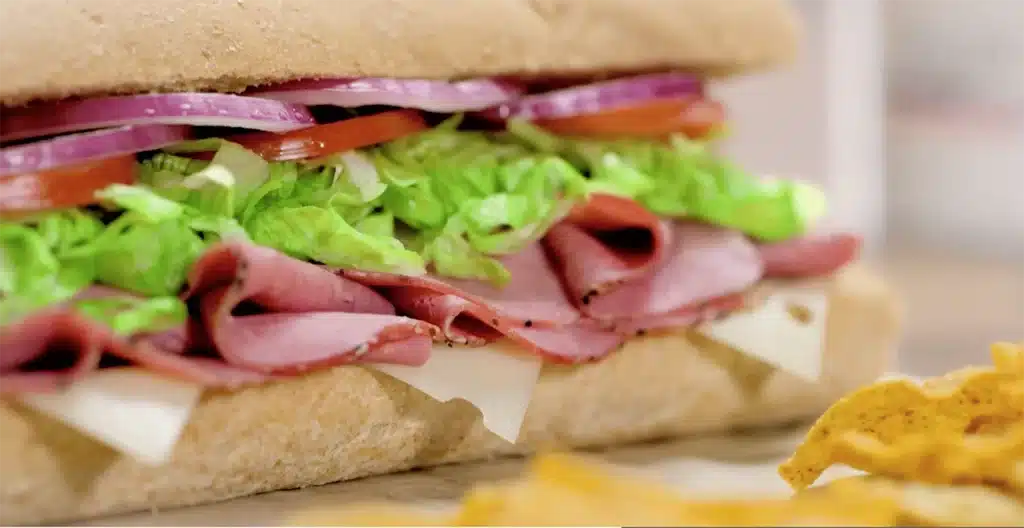
At some point today, a significant portion of the American workforce will eat a sandwich for lunch — not because they planned it carefully, but because it is what they usually do. The sandwich occupies a rare place in consumer behavior: it is a routine, not just a meal. And routines are among the most defensible revenue sources a business can be built on.
That behavioral reality is worth understanding before evaluating a sandwich franchise opportunity. Who is buying, how often, and why they keep coming back shapes the investment case as much as any financial metric.
The Lunch Habit America Hasn’t Broken in Decades
The lunchtime sandwich habit is one of the most entrenched in American food culture. It satisfies the requirements lunchtime consumers prioritize consistently: speed, portability, customizability, and reasonable cost. No other food format checks all four boxes as reliably.
This isn’t a generational trend. Survey data shows that sandwiches rank among the most frequently consumed lunch options across age groups, income levels, and regions. The format adapts — preferences shift between bread types and proteins — but the fundamental behavior persists with remarkable durability.
For a franchise investor evaluating sandwich market demand, that durability is the signal worth paying attention to. Businesses built on genuine behavioral habits don’t manufacture demand — the customer base already exists.
What “Trade-Down” Behavior Does for Sandwich Franchises During Recessions
What makes a food concept recession-resilient — rather than merely recession-tolerant — is how consumer behavior actually shifts during downturns. When disposable income contracts, people don’t stop eating out. They change where they spend their food budget.
The pattern is well established: economic pressure drives a predictable trade-down from full-service dining toward quick-service options. Consumers don’t stop expecting quality — they stop paying full-service prices for it. A customer who was spending $20 on a sit-down lunch now spends $10 on a well-made sandwich, often visiting more frequently.
This is what separates a best food franchise during recession from one that merely weathers downturns. Sandwich franchises often capture new customers from the segment above them — people recalibrating their spend without lowering their expectations.
The Customization Effect: Why Choice Drives Loyalty
The repeat-visit mechanism goes beyond routine. It connects to something more fundamental in consumer behavior: the ownership effect that comes from customization. When a customer builds their own sandwich — choosing bread, protein, vegetables, and sauce — they aren’t just ordering. They’re expressing a preference, and that creates a mild but real sense of investment in the outcome.
Behavioral economics research consistently shows that people value outcomes they’ve had a hand in creating more than outcomes simply delivered to them. A customer who “builds” their regular order develops a preference for that specific combination tied to a specific brand — reinforced with every repeat visit.
The result is sandwich restaurant repeat customers with meaningfully higher lifetime value than those of fixed-menu formats. Customization is not just a product feature — it is a loyalty engine.
Sandwich Market Demand That Holds Across Economic Conditions
Why sandwich franchises are profitable becomes clear when demand durability is the frame. Habitual consumption, trade-down resilience, and customization-driven loyalty combine into a demand profile that doesn’t require favorable economic conditions to perform — it performs better in good conditions and holds steady in difficult ones.
Food franchise demand trends over the past two decades reinforce this consistently. The sandwich category hasn’t experienced the dramatic peaks and troughs that affect trend-sensitive concepts. The consumer base is broad, the behavioral drivers are structural rather than situational, and the price point holds across income levels.
Why people eat sandwiches daily isn’t a marketing puzzle — it’s a behavioral baseline to leverage.
What Repeat Customer Behavior Means for Franchise Investors
For anyone evaluating sandwich franchise market share and category growth, the repeat-customer dimension is worth particular attention. A food concept with strong repeat visit rates generates revenue more predictably than one dependent on new customer acquisition. Marketing spend is more efficient. Unit economics stabilize faster. Word-of-mouth compounds more naturally.
The fastest-growing food franchise category conversations in recent years have increasingly centered on concepts that own a specific daily use case rather than competing for the broader “dining out” occasion. Lunch ownership — the ability to be the automatic choice for a specific customer’s midday meal — is one of the most valuable market positions a food concept can occupy, and sandwich franchises are uniquely built to hold it.
Why This Is the Moment to Start a Franchise in the Sandwich Category
Consumer behavior evolves slowly. The habits, economic patterns, and psychological mechanisms described here have been shaping sandwich category performance for decades. What has changed is the competitive landscape — available franchise network opportunities now exist in markets genuinely underpenetrated relative to their demand base.
Port of Subs sits at that intersection: a proven brand, a format built on durable consumer behavior, and territories in markets where demand exists but hasn’t been fully captured. For investors who want to start a franchise backed by category-level demand that doesn’t depend on timing luck, this combination deserves a serious look.
The customers are already there. The habit is already formed. The question is whether your franchise is where they go to satisfy it.