

Most people decide they want to own a franchise long before they study what it actually costs. They visit a location, fall for the product, imagine their name above the door — and only after that emotional commitment do they open a spreadsheet. That sequence is understandable. It’s also backwards.
The smartest franchise investors start with the numbers. And when the numbers are the starting point, sandwich franchises make a compelling case that most other food categories cannot match.
Start With the Numbers, Not the Brand Name
Here is the question that should come first, before the site tours and the discovery days and the franchise expos: what does this investment actually cost me, what does it return, and how long until I see it?
Every food franchise has a story. The better question is whether that story is backed by a financially viable business model — and whether the category itself gives you a structural advantage before you’ve served a single customer.
Sandwich concepts offer that structural advantage. Understanding why requires an honest look at how food franchise startup costs compare across the most popular categories.
What Food Franchise Startup Costs Actually Look Like Across Categories
The Franchise Disclosure Document — the FDD — tells the real story of what entry costs look like. Across major food franchise categories, the numbers diverge significantly.
A full-service or fast-casual restaurant franchise can demand $500,000 to well over $1 million in total investment before a single customer walks in — covering construction, commercial kitchen equipment, furniture, signage, training, and working capital. Pizza franchises sit in a similar range, with delivery infrastructure adding complexity. National burger concepts often demand even more, making them inaccessible to most first-time franchisees without outside capital.
A well-structured sandwich franchise investment operates in a fundamentally different cost tier. Smaller square footage, simpler equipment, and lower buildout costs mean the total entry point is considerably more accessible — which matters both upfront and for the ongoing cost structure once you’re operating.
The Sandwich Advantage: Smaller Kitchen, Lower Overhead, Faster Break-Even
The economics of a sandwich concept work in the franchisee’s favor from the ground up. Unlike full-service restaurants that require hood systems, fryers, dishwashing infrastructure, and expansive prep areas, a sandwich operation is built around efficient linear assembly. That simplicity means lower equipment costs, smaller utility bills, fewer staff per shift, and a footprint that costs less to lease and build out.
The result: faster break-even. When fixed and variable costs are lower from day one, the revenue threshold at which you cover expenses and turn a profit is meaningfully closer. An affordable food franchise in this category isn’t just easier to open — it’s structurally built to reach profitability faster than more complex food concepts. Every month between opening and break-even is a month of drawing down working capital; reducing that window is one of the most direct ways a franchise model creates owner value.
QSR Franchise ROI — Why Simplicity Compounds Over Time
The QSR franchise ROI conversation is where sandwich concepts distinguish themselves most clearly from the competition. Return on investment in the food franchise space is driven by two levers: what the business earns, and what it costs to earn it. Sandwich concepts tend to perform well on both sides of that equation.
Revenue in a sandwich format benefits from high transaction velocity — customers move through the line efficiently, meaning high-traffic locations serve significant volume without table turns or the labor overhead of full-service. On the cost side, lower food complexity means tighter inventory management, less waste, and more predictable cost of goods sold.
Combined with accessible entry costs and strong throughput, the return profile of a well-run low-cost food franchise opportunity is genuinely competitive with concepts requiring twice the capital to open.
What Makes Port of Subs a Strong Sandwich Franchise Investment
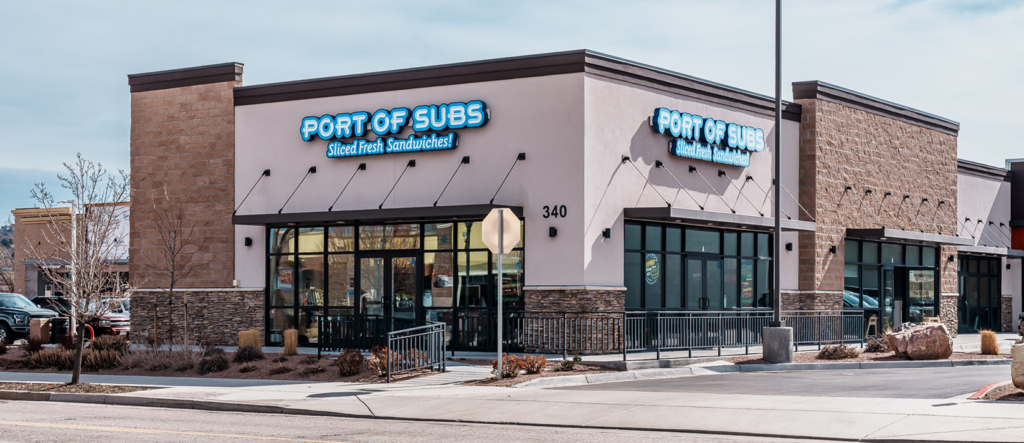
Not every sandwich franchise is built equally, and the financial case for any specific brand depends on its terms, support, and track record. Port of Subs enters that conversation with a 50-year operating history and an investment structure built for serious owner-operators — without requiring institutional capital to start.
New sub sandwich franchises often make headlines for growth alone. Port of Subs earns recognition differently: Eat This, Not That named it among the fastest-growing sandwich chains — a distinction that reflects real consumer demand, not just expansion. A brand with genuine consumer traction drives the foot traffic that makes the financial model work.
For investors asking how much does a sandwich franchise cost with Port of Subs, the Port of Subs franchise cost is among the more accessible entry points in the best franchise to own in the food industry conversation — backed by training, supply chain support, and a system that defends the investment.
The Untapped Market Advantage
One variable experienced franchise investors watch closely — and first-timers often miss — is market saturation. Opening a sandwich shop franchise opportunity in a market with unmet demand produces fundamentally different results than entering a crowded territory.
Port of Subs has available territories in markets where submarine sandwich franchises haven’t yet captured the consumer base. That combination — established brand, underpenetrated market — is as close to a structural advantage as the food franchise world offers.
The financial case for a sandwich franchise rests on three interconnected realities: lower entry costs than competing food categories, an operational model that reaches profitability faster, and a demand profile that holds across economic conditions. For investors who start with the numbers — as they should — those realities are difficult to argue with.
Ready to see the numbers for yourself? Explore the Port of Subs franchise opportunity and request your detailed investment information today.